Google Ads vs Meta Ads: Which Platform Should Your Business Prioritise in 2026?

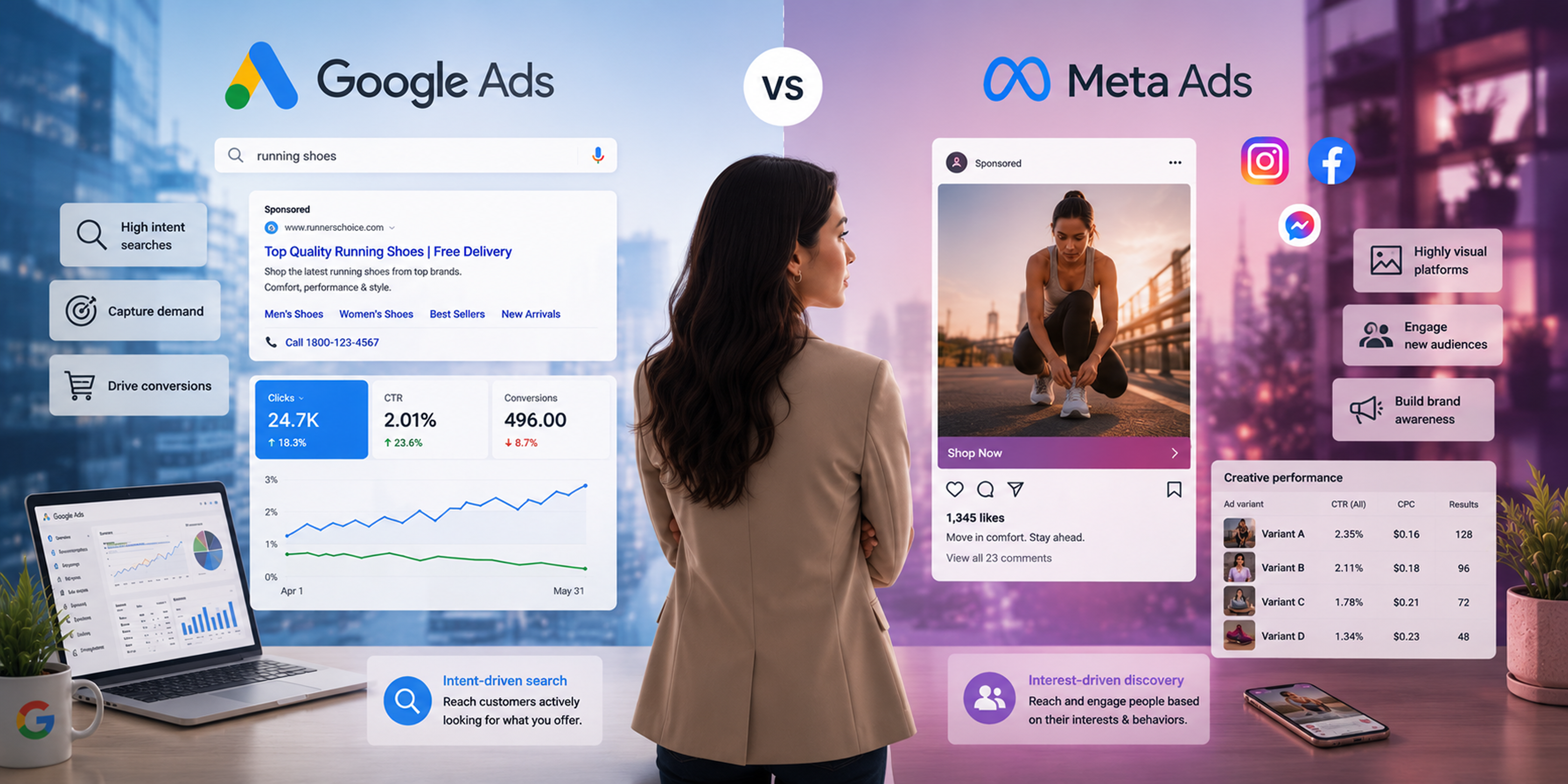
You have probably heard Google Ads and Meta Ads discussed like they are two flavours of the same thing. They are not, and treating them as interchangeable is like choosing between a fishing rod and a net based solely on which one looks cheaper. Both catch fish, but in completely different water, for completely different reasons.
The cost gap between the two has never been wider. In 2026, Google Search Ads average $2.96 to $4.22 per click, up 18% year-over-year, while Meta Ads hold steady at $0.78 CPC across industries (Terra HQ, 2026; Ryze AI, 2026). But cheaper clicks do not mean better returns, and more expensive clicks do not mean wasted budget. The real question is not which platform costs less. It is which platform matches the moment your customer is in.
The difference between Google Ads and Meta Ads is strategic, not cosmetic. Getting this right is the difference between ad spend that compounds and ad spend that haemorrhages. As a growth acceleration and brand strategy firm, XCCELER has helped businesses across sectors navigate exactly this decision.
Let's break down everything you need to know.
Boost Your Business
What Is Google Ads? (The Intent Harvester)
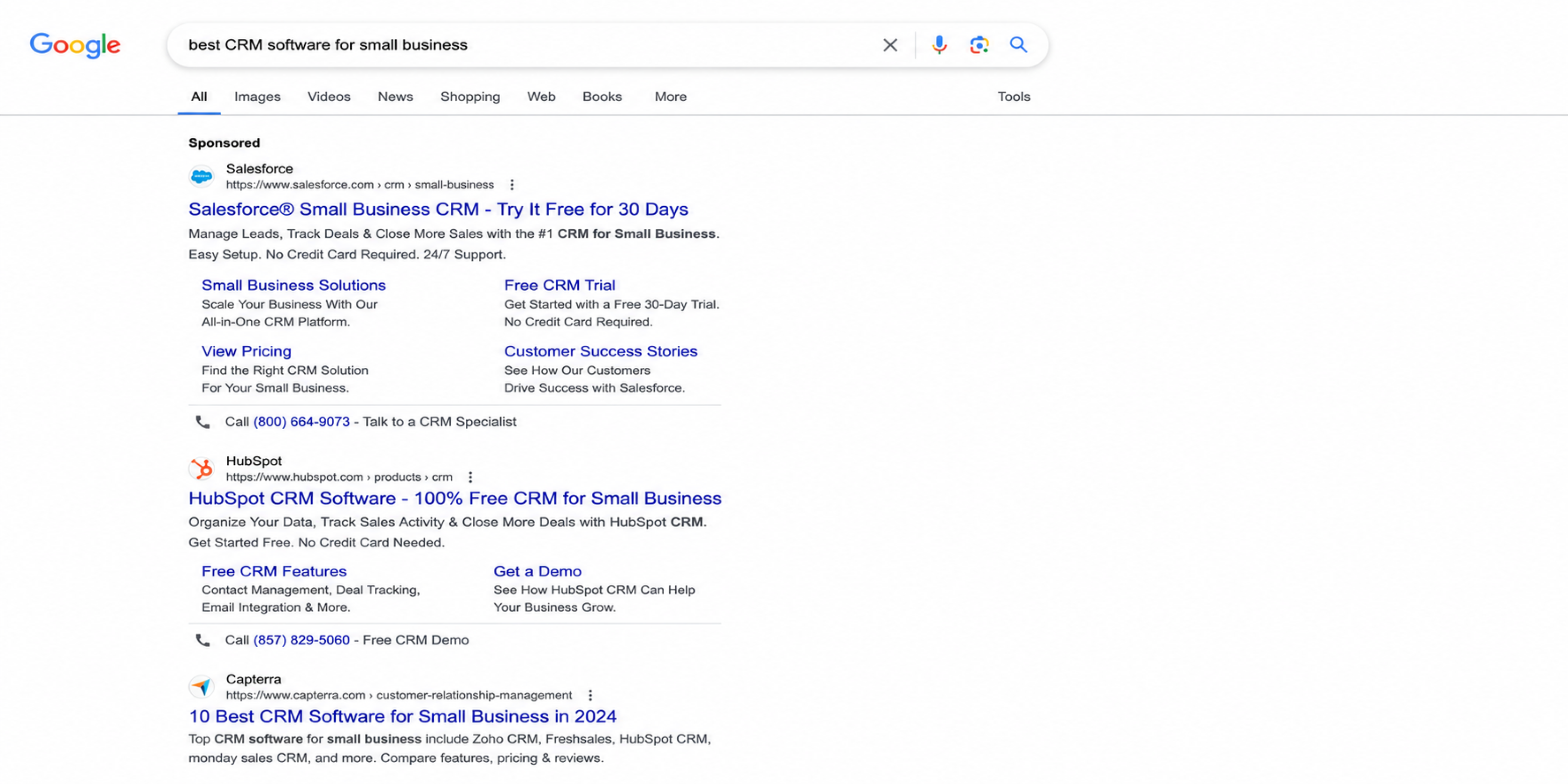
Google Ads is a pay-per-click advertising platform that shows your ads on Google Search, YouTube, Gmail, Google Maps, and the Display Network. Its defining characteristic is intent: your ad appears at the precise moment someone is already searching for what you sell.
When someone types "best accounting software for small businesses," they are not browsing. They are deciding. Google Ads positions your brand as the answer at the exact second that decision is forming. You are not creating demand; you are harvesting it.
Why Search Intent Changes Everything
Google's conversion advantage is structural, not accidental. Users who click a Google Search ad have already self-qualified: they named the problem, searched for a solution, and clicked on what looked most relevant. The cross-industry average conversion rate for Google Search Ads is 3.75% to 4.40% in 2026 (Foundry CRO, 2026). For high-intent categories like home services and legal, this reaches 5% to 10%. The click costs more. It converts more. For businesses where a single conversion is worth $500 or more, the maths consistently favours Google.
What Is Meta Ads? (The Demand Generator)
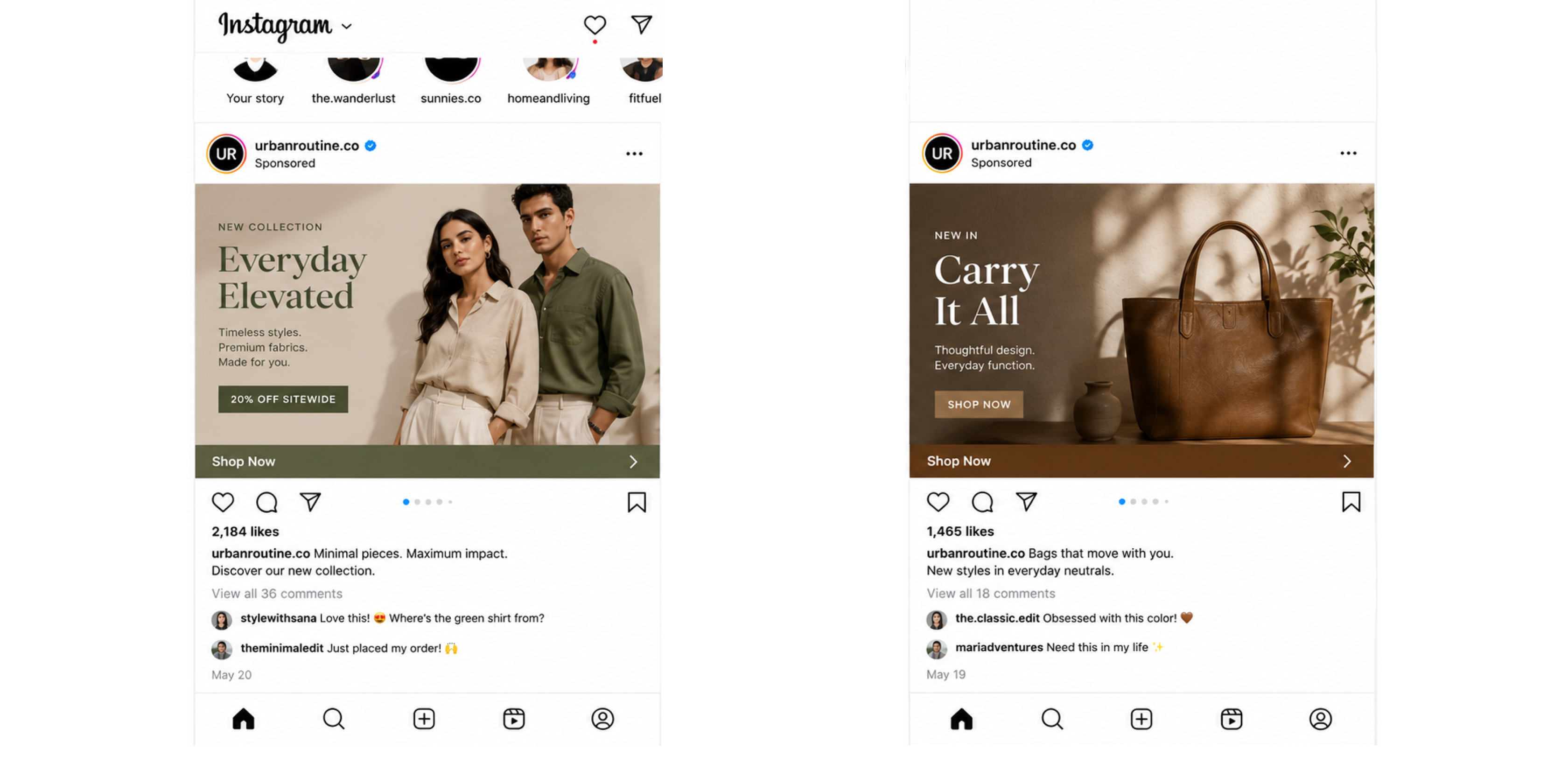
Meta Ads is an interest and behaviour-based advertising system running across Facebook, Instagram, Messenger, and Threads. Its defining characteristic is discovery: your ad appears in front of people who match a profile of your ideal customer, whether or not they have ever heard of you or searched for what you sell.
Think of Meta Ads as the best shop window on the busiest high street in the world. 3.07 billion monthly active users on Facebook, 2.35 billion on Instagram, and a growing 275 million on Threads (Ryze AI, 2026). The person scrolling past your ad was not looking for you. But with the right creative, they want to be.
Why Visual Discovery Drives Different Buying Behaviour
Meta Ads create the need before the search exists. A user might see your product in a Reel, save it, follow your account, and convert three weeks later after seeing a retargeting ad. This longer buying cycle is precisely why attribution between Meta and Google consistently confuses teams comparing the two.
The average CPC on Meta sits at $0.78 across all industries in 2026 (Ryze AI, 2026), with fashion and apparel as low as $0.45 and finance reaching $3.77. Meta Ads excel at:
- Brand awareness and product discovery for new audiences
- Retargeting warm audiences who have visited your site or engaged with content
- Visual and impulse-driven categories: fashion, beauty, food, lifestyle, and consumer goods
- Building lookalike audiences from your best existing customers
Google Ads vs. Meta Ads: The Core Differences
The choice between the two platforms comes down to these dimensions:
- Audience type: Google = people actively searching for a solution right now | Meta = people who match your ideal customer profile, regardless of current search behaviour
- Intent level: Google = high; user has named the problem | Meta = low to medium; user is discovering a potential solution
- Cost per click: Google = $2.96 to $4.22 average on Search (Terra HQ, 2026) | Meta = $0.78 average across industries (Ryze AI, 2026)
- Conversion mechanism: Google = captures existing demand | Meta = creates new demand
- Creative format: Google = text-led, keyword-matched | Meta = visual-first, algorithm-matched
- Attribution window: Google = typically shorter; click-to-conversion often happens within 24 hours | Meta = often longer; discovery to purchase can span days or weeks
- Best for: Google = B2B, high-consideration purchases, services with active search volume | Meta = B2C, visual products, brand building, and audiences who do not yet know they need you
Think of it this way: Google Ads is a salesperson standing at the right place at the right moment. Meta Ads is a window display that stops someone who was not even shopping.
Why Your Business Almost Certainly Needs Both
Asking 'Google Ads or Meta Ads?' is like asking 'should I use email or phone to talk to clients?' The answer depends on the situation, and the best businesses use both, strategically.
Different Audiences Live in Different Places
Some of your best potential customers search actively and compare options before buying. Others have never heard of you and will not search for you until they have seen you somewhere first. Google captures the first group. Meta creates the second. If you use only one platform, you are structurally invisible to the audience the other one reaches.
Different Funnel Stages Demand Different Platforms
- Awareness: Meta Ads introduce your brand to cold audiences who match your customer profile
- Consideration: Meta retargeting keeps you visible; Google captures people now actively comparing options
- Decision: Google Search closes high-intent buyers already searching your category; Meta dynamic product ads re-engage cart abandoners
- Post-purchase: Meta drives repeat purchases and loyalty through lookalike audiences and CRM-based campaigns
The Compounding Effect of Running Both Together
The most effective paid media strategies in 2026 use Meta to warm audiences and Google to close them. Someone who sees your Meta ad, visits your site, then searches your brand name or category on Google converts at a substantially higher rate than cold traffic on either platform alone. Multi-touch attribution studies consistently show that customers who interact across multiple paid channels convert at higher rates and at lower blended CPA than single-channel customers (Salesforce Research, 2025).
Read our guide on Paid Media Strategy for Growing Businesses to understand how to structure your budget across both platforms.
Key Solutions for Businesses Running Google Ads and Meta Ads in 2026
1. Match Platform to Objective First (Not Budget to Platform)
The most common mistake we see: businesses allocate budget based on which platform they are more comfortable with, then wonder why ROAS is disappointing. The framework that actually works is simpler. Start with the objective.
The solution:
- If the objective is capturing existing demand from people already searching: start with Google Search
- If the objective is building awareness or reaching audiences who do not yet know your category exists: start with Meta
- If you have both objectives and budget permits: run both with separate KPIs and attribution windows for each
2. Use Industry Benchmarks to Set Realistic Expectations
SaaS companies see Google delivering 6.2x ROAS vs Meta's 3.4x because SaaS buyers search actively and convert on intent. Fashion brands flip this, with Meta delivering 9.1x ROAS vs Google's 5.8x because visual discovery drives impulse purchases (Ryze AI, 2026). Using the wrong benchmark for your sector means either cutting campaigns that are working or over-investing in ones that are not.
The solution:
- Identify your industry benchmark ROAS, CPA, and CTR for each platform separately
- Set platform-specific KPIs based on your business model, not general advice
- Review benchmarks quarterly; Meta CPA is up 38% year-over-year (Ryze AI, 2026) and Google CPCs are up 18% (Terra HQ, 2026)
3. Build Your Measurement Framework Before You Spend a Single Dollar
Attribution is where most multi-platform strategies fall apart. Meta and Google both claim credit for the same conversion, your analytics shows a different number, and your team spends two weeks arguing about which platform is working.
The solution:
- Implement server-side tracking to capture data accurately across both platforms
- Set consistent attribution windows: a 7-day click window on both platforms allows like-for-like comparison
- Use a third-party measurement tool to get platform-neutral attribution before scaling spend
4. Creative Strategy Is Not Optional on Meta
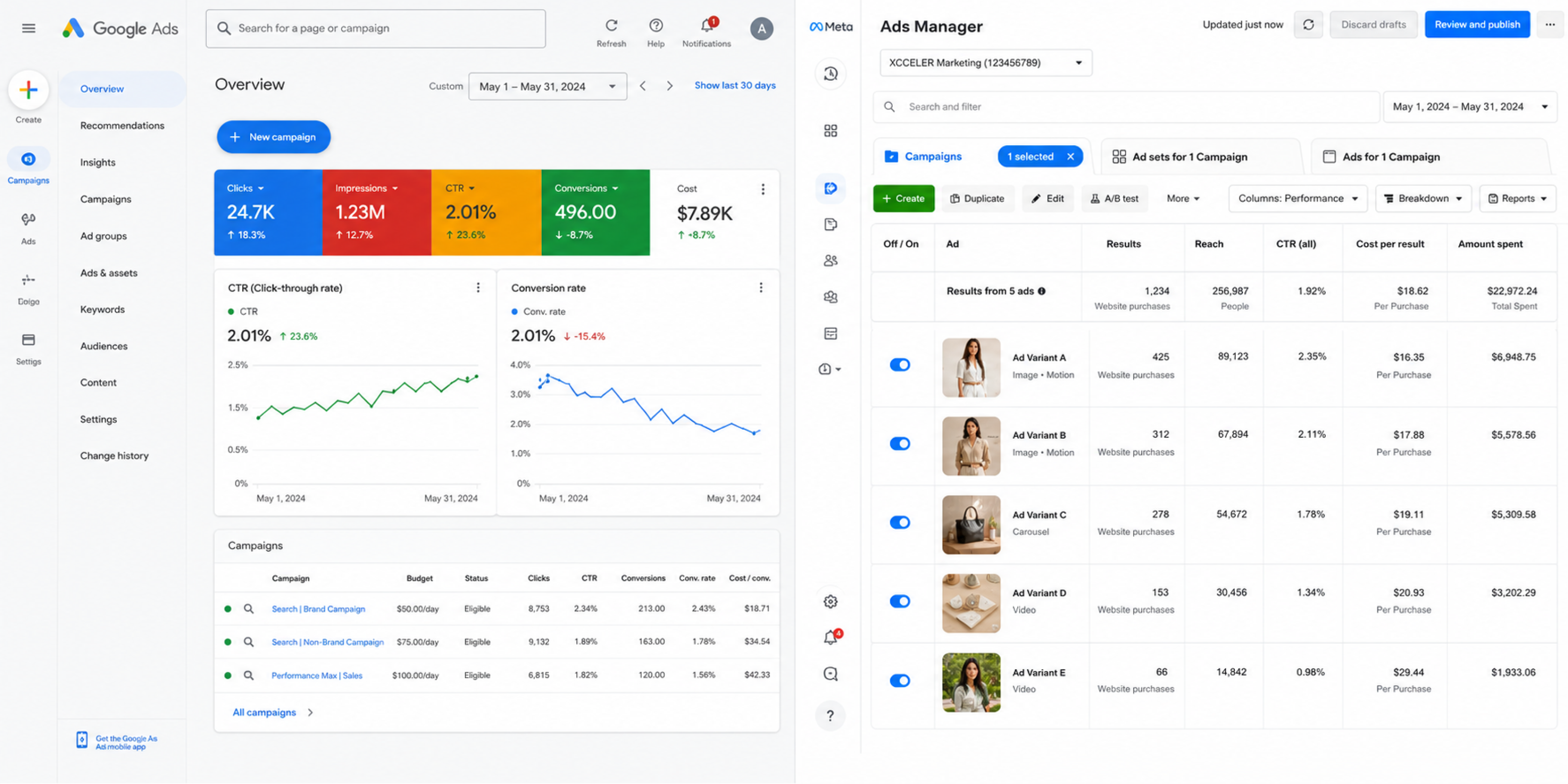
Google Ads rewards relevance between keyword, ad copy, and landing page. Meta Ads rewards creative quality above almost everything else. In 2026, Meta removed detailed targeting exclusions in March 2025, pushing advertisers toward broader audiences and heavier reliance on creative performance (Scalix AI, 2026). Your creative is now your targeting.
The solution:
- Treat Meta creative as a continuous testing programme, not a one-off project
- Run 3 to 5 creative variants per ad set at all times; let the algorithm identify winners
- Refresh creative at least every 4 to 6 weeks to avoid audience fatigue
5. AI Bidding Has Changed the Rules on Google in 2026
86% of advertisers now use Smart Bidding on Google Ads, and AI Max for Search launched globally in early 2026, delivering 7% more conversions at similar CPA on average and up to 27% conversion lift in some campaigns (Terra HQ, 2026).
The solution:
- Move campaigns to Target CPA or Target ROAS once you have 30 or more conversions per month
- Feed Google high-quality first-party audience signals and conversion data to improve AI optimisation
- Monitor performance weekly; adjust targets every 4 to 6 weeks rather than setting and forgetting
Google Ads and Meta Ads in a Privacy-First 2026
First-Party Data Is Now the Competitive Advantage
Third-party cookie deprecation has fundamentally changed how both platforms target. The businesses winning in 2026 are those with rich first-party data: email lists, CRM data, purchase histories, and site behavioural data. Both platforms can ingest this data to build custom audiences and lookalikes. Those without it are bidding blind against competitors who are not.
AI Is Running the Auction on Both Platforms
Google's AI Max and Meta's Advantage Plus Campaigns both use machine learning to optimise delivery, audience selection, and bid strategy autonomously. 78% of all Google Ads spend now uses Smart Bidding or Performance Max (Digital Applied, 2026). Meta's enhanced machine learning drove its average conversion rate improvement from 7.72% to 8.20% in 2026 (Ryze AI, 2026). The era of manual campaign management producing competitive results on either platform is effectively over for most advertisers.
Creative Quality vs Landing Page Quality: Different Bottlenecks
The 2026 Google Ads data reveals a striking pattern: CTR rose 7.49% year-over-year while conversion rates fell 9.28% across 13 of 14 industries (Foundry CRO, 2026). The ads are getting better at generating clicks. The pages are failing to convert them. On Meta, creative is the primary lever. These are different bottlenecks requiring different investments.
| Feature | Google Ads | Meta Ads |
|---|---|---|
| Primary Channel | Search, YouTube, Gmail, Display, Maps | Facebook, Instagram, Messenger, Threads |
| Audience Type | High-intent active searchers | Interest and behaviour-matched audiences |
| Data Required | Keywords, search intent signals, conversion data | First-party data, interest profiles, creative assets |
| Average CPC (2026) | $2.96 to $4.22 (Search) | $0.78 across all industries |
| Average Conversion Rate | 3.75% to 4.40% (Search) | 8.20% (broad definition, all objectives) |
| Average ROAS | 3.8x Search; 6.2x SaaS; 5.8x fashion | 3.4x SaaS; 9.1x fashion |
| Cost per Acquisition | $23.74 median across industries | $38.19 median across industries |
| Time to Set Up | 1 to 2 weeks for Search campaigns | 3 to 7 days for most campaign types |
| Best For | B2B, high-consideration purchases, services with search volume | B2C, visual products, brand discovery, impulse categories |
| Creative Requirement | Text-led; keyword and landing page alignment critical | Visual-first; creative quality is the primary performance lever |
| Privacy Considerations | Less dependent on third-party data post-AI Max | Increasingly reliant on first-party data post-cookie changes |
| AI Automation | AI Max for Search; 78% of spend on Smart Bidding | Advantage Plus Campaigns; broad targeting with AI delivery |
Sources: Ryze AI 2026, Terra HQ 2026, Foundry CRO 2026, Scalix AI 2026, Digital Applied 2026.
Best Practices for High-ROI Google Ads and Meta Ads Campaigns
For Google Ads:
- Match your bidding strategy to your conversion volume. Target CPA and Target ROAS require 30 or more conversions per month to optimise effectively. Below that threshold, manual CPC or Maximise Conversions produces better results.
- Quality Score is your CPC lever. Improving Quality Score from 5 to 8 reduces CPC by approximately 30% (Digital Applied, 2026). Prioritise ad relevance, expected CTR, and landing page experience in that order.
- Segment mobile and desktop bidding. Mobile accounts for 65% of Google Ads clicks but only 47% of conversions. Bidding mobile and desktop identically means overpaying for lower-converting traffic.
- Negative keywords are profit protection. Audit your search term report weekly; irrelevant clicks at $3 to $4 each compound quickly into wasted budget.
- Feed AI bidding quality data. Smart Bidding is only as good as the conversion signals you provide. Ensure your conversion tracking captures the full value of each action, not just the first touchpoint.
For Meta Ads:
Struggling With Any of These?
- Treat creative as your targeting. With Meta's move to broader audiences post-March 2025, your creative is doing the audience selection work. Weak creative cannot be compensated for with better targeting.
- Run 3 to 5 creative variants per ad set continuously. Allow Meta's algorithm to identify the best performers and rotate in fresh creative every 4 to 6 weeks to avoid audience fatigue.
- Build your first-party data strategy now. CRM audiences, email lists, and purchase data significantly outperform interest-based audiences in conversion rate and ROAS. Every customer interaction is an opportunity to capture data with consent.
- Separate acquisition and retargeting campaigns. Cold audiences and warm audiences behave differently and need different creative, messaging, and bid strategies. Mixing them in one campaign obscures performance and reduces optimisation signal.
- Track against business outcomes, not platform metrics. Meta's attribution model can overstate conversions. Use third-party measurement or view-through attribution windows calibrated to your actual buying cycle.
Common blockers we see across businesses at this decision point:
This is exactly the kind of complexity XCCELER works through with businesses every day. As a growth acceleration and brand strategy firm, we help teams build paid media strategies that use both platforms at the right moment in the customer journey.
- Attribution confusion: Both platforms claim the same conversion; the real number is somewhere in the middle and requires independent measurement to find
- Creative fatigue on Meta: Businesses invest in one batch of creative, launch it, and wonder why performance degrades after six weeks
- Google CPC inflation: Rising costs without a corresponding Quality Score improvement strategy means the same budget buys fewer clicks every quarter
- AI bidding without enough conversion data: Smart Bidding campaigns launched too early, without sufficient conversion history, optimise toward the wrong outcomes
Our paid media services include:
Choosing between Google Ads and Meta Ads based on which one costs less per click is like choosing between a surgeon and a dentist based on who charges less per hour. The right choice depends entirely on what you are trying to fix.
Google Ads puts your brand in front of people already looking for what you sell. Meta Ads introduces you to people who match your customer profile before they ever search for you. Together, they cover the entire journey from first impression to first purchase to repeat customer.
You do not have to figure out the right allocation alone. Whether you need to build a paid strategy from scratch, fix a Google Ads account bleeding budget, or unlock Meta's creative potential for your brand, we have built these systems across sectors.
- Platform strategy and budget allocation across Google and Meta
- Campaign architecture, audience segmentation, and creative direction
- First-party data strategy and conversion tracking implementation
- Ongoing performance optimisation and reporting
- Full-funnel paid media management integrating both platforms
About XCCELER
XCCELER is a growth acceleration and brand strategy firm that partners with organisations to design strategies and experiences that convert interest into revenue. Our work spans brand positioning, channel strategy, paid media, and conversion architecture, built around the changes that move commercial metrics without requiring a full organisational overhaul.
Learn how XCCELER approaches paid media strategy