
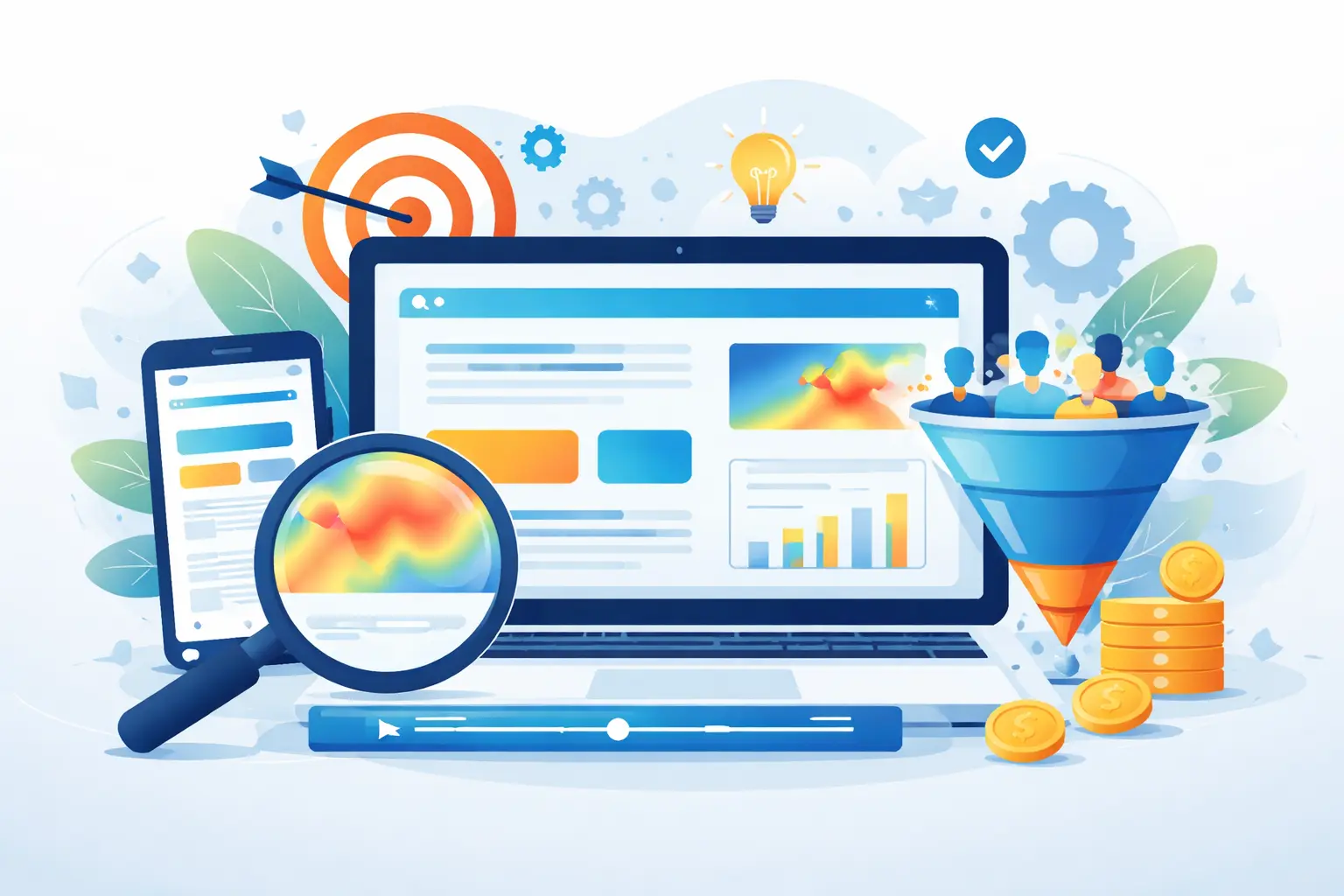
How User Experience Drives Higher Conversions in Digital Marketing
In today’s competitive digital marketing landscape, traffic alone doesn’t guarantee results. You can spend heavily on ads, SEO, or social media-but if users struggle to navigate your website, conversions will suffer.
This is where UX design becomes a growth lever.
User experience is no longer about visual appeal alone. It’s about removing friction, guiding attention, and creating intuitive journeys that turn visitors into leads, customers, and loyal users. When UX is aligned with conversion rate optimisation (CRO), every click, scroll, and interaction works toward measurable business outcomes.
This article explores how user experience directly impacts conversions, the UX principles that matter most, and how data-driven tools like website heat maps and website session replay help optimise performance.
What Is UX Design and Why It Matters for Conversions
UX design refers to how users experience a website or digital product-from first impression to final action. It includes usability, accessibility, navigation, page speed, content structure, and interaction design.
A strong UX answers three critical questions instantly:
- Can users understand what this page is about?
- Can they find what they need without effort?
- Is it easy to complete the desired action?
When the answer to any of these is “no,” conversions drop.
From a conversion rate optimisation standpoint, UX design is responsible for:
- Reducing bounce rates
- Increasing time on site
- Improving form completions
- Driving more qualified leads and sales
Simply put, better UX leads to better decisions-and better decisions lead to higher conversion
The UX–Conversion Connection: How Experience Influences Behavior
Users don’t consciously think about UX-but they feel it.
A slow site, cluttered layout, or confusing navigation creates friction. Friction kills trust. And without trust, users don’t convert.
Here’s how UX directly shapes conversion behaviour:
User-Centered Design Improves Decision-Making
Designing around real user needs-not internal assumptions-creates clarity. Clear CTAs, logical page flows, and predictable interactions reduce cognitive load and make decisions easier.
Intuitive Navigation Reduces Drop-Off
When users can instantly understand where to go next, user engagement increases. Poor navigation forces users to think-and thinking leads to exits.
Mobile UX Is No Longer Optional
Most digital interactions now happen on mobile. Responsive layouts, thumb-friendly buttons, and fast load times are essential for mobile conversion optimisation.
Visual Hierarchy Guides Attention
UX design uses spacing, contrast, typography, and layout to draw attention to what matters most-forms, CTAs, pricing, or key messages.
UX Principles That Drive Higher Conversion Rates
To improve conversions through UX, focus on these core principles:
Streamlined User Journeys
Every extra step reduces conversion probability. Remove unnecessary fields, clicks, and distractions. Shorter paths convert better.
Page Speed and Performance
Even minor delays affect results. Faster pages improve both UX and SEO-making performance optimisation a CRO priority.
Consistency and Predictability
Consistent layouts, colors, and interaction patterns build familiarity and trust, which directly influence conversion decisions.
Accessibility and Usability
Readable fonts, strong contrast, and simple language ensure your experience works for everyone-expanding reach and reducing friction
UX, SEO, and Digital Marketing: A Connected System
UX doesn’t operate in isolation. It directly supports broader digital marketing performance.
- Search engines favour sites with strong engagement signals
- Lower bounce rates improve SEO rankings
- Better UX increases the ROI of paid traffic
- Optimized landing pages convert more ad clicks into leads
In short, UX amplifies every marketing channel you invest in.
Measuring UX Success Beyond Conversions
While conversions are the end goal, UX success also shows up in:
Increased user engagement metrics
- Longer session durations
- Lower exit and bounce rates
- Higher customer satisfaction and retention
These indicators confirm that your experience is working-even before conversion numbers peak.
UX Is a Growth Strategy, Not a Design Task
User experience is no longer a “design phase” item-it’s a core digital marketing strategy.
When UX design and conversion rate optimisation work together, businesses create experiences that feel effortless, trustworthy, and persuasive. By leveraging behavioral data through website heat maps and website session replay, brands can continuously refine their digital presence and unlock sustainable growth.
If you want higher conversions, start by improving how users experience your brand-because great experiences convert.