
Frequently Asked Questions (FAQs) are no longer just helpful to users – they can be a powerful way to boost your visibility in Google search results and AI-driven summaries. By implementing structured data correctly, your FAQs can appear directly in search results, providing concise answers to your users and enhancing your SEO. In this guide, we’ll break down the technical steps, schema markup, and best practices to ensure your FAQ content performs at its peak.
Search engines, including Google, now prioritize structured content that directly answers users questions. Properly marked-up FAQs can:
Google explicitly recommends using the FAQPage schema for content that answers common questions:
Before adding schema, ensure your FAQ content is:
Example HTML structure without schema:
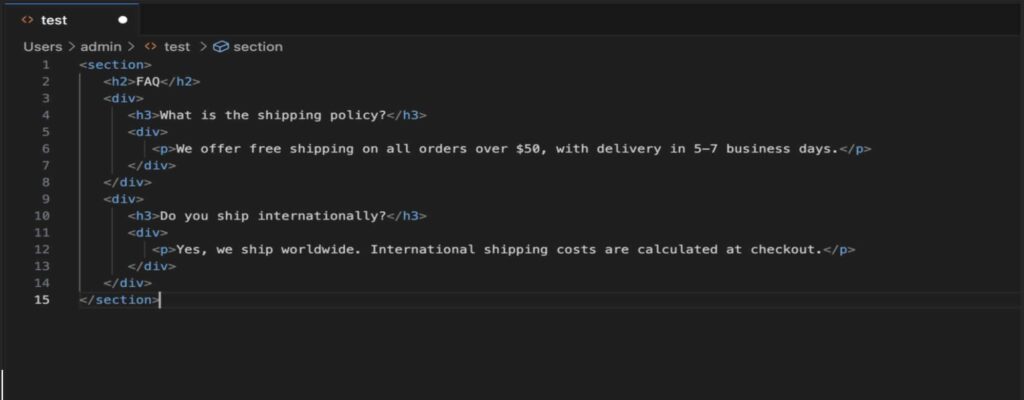
Schema markup tells search engines what your content represents, making it eligible for rich snippets.
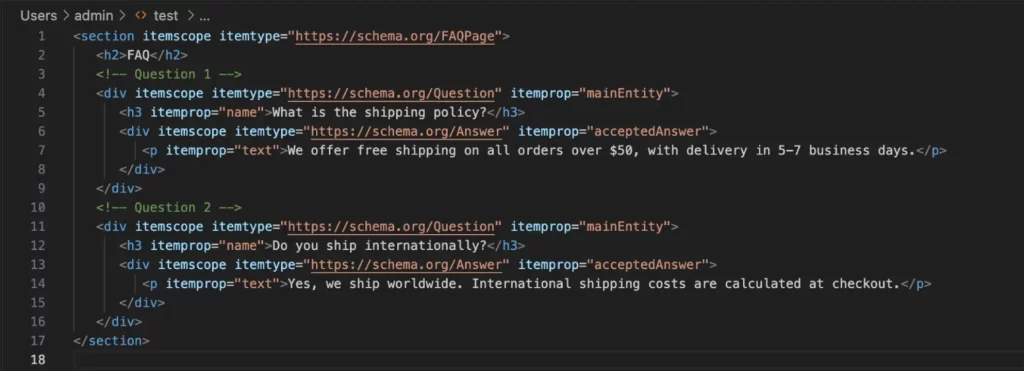
Microdata version:
| Attribute | Purpose |
|---|---|
| itemscope | Defines a new schema entity |
| itemtype | Indicates the type (FAQPage, Question, Answer) |
| itemprop="mainEntity" | Marks the question itself |
| itemprop="name" | Question text |
| itemprop="acceptedAnswer" | Answer entity |
| itemprop="text" | Answer content |
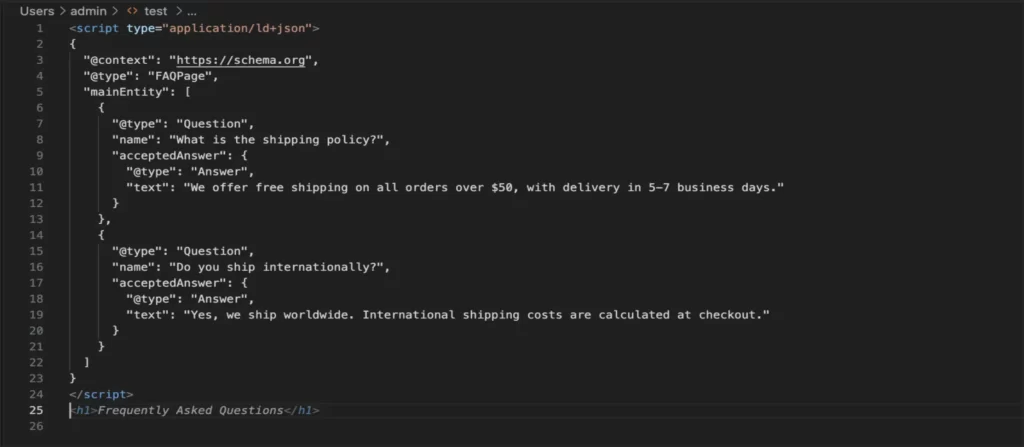
JSON-LD is preferred by many developers because it’s easier to maintain and doesn’t mix with HTML markup.
Validation is critical to ensure your structured data is eligible for rich results.
Always fix errors before publishing to avoid penalties or missing rich snippets.
Even if schema is correct, Google and AI systems will rank your FAQs based on content quality and relevance.
Tips for Optimization:
1.Answer questions concisely:
2.Use natural language:
3.Include internal links:
4.Organize FAQs by category:
5.Add multimedia if needed:
6.Regularly update FAQs:
To get your FAQs included in AI summaries or chat responses:
Google explicitly warns against these practices in their FAQPage guidelines.
If you’re using WordPress, consider:
1. Block editor: Use a “FAQ” block with schema support.
2. Plugins:
Implementation example in WordPress block:

This ensures both Google and AI systems can read your FAQs.
By combining:
…your FAQs can appear directly in Google search results and AI responses, helping your users find answers faster, boosting your site’s visibility, and reducing support workload.
Next Steps: