How to Convert Enquiries into Enrolments: A Modern Funnel Guide for Educational Institutions
Ever wondered why some education brands seem to convert enquiries into enrolments almost like clockwork, while others struggle despite steady lead flow? It’s not luck, and it’s not aggressive selling. It’s the result of a well‑designed education lead generation funnel backed by thoughtful digital marketing for educational institutions, strong SEO visibility, optimised website CRO, and intent‑driven Google Ads for schools.
Most colleges, universities, and training institutes don’t suffer from a lack of interest. They suffer from a lack of structure. Enquiries come in, but there’s no clear system guiding students from curiosity to confidence. As a result, leads go cold, follow‑ups feel forced, and admissions teams end up chasing instead of guiding.
This guide explores how modern institutions can build a student‑centric funnel that reflects how students actually make decisions-slowly, emotionally, and with a lot of research along the way.
Why Education Enquiries Rarely Convert on Their Own
Students don’t enrol after seeing one ad or visiting your website once. The journey from “I might be interested” to “I’m ready to apply” involves multiple touchpoints, questions, comparisons, and reassurance moments. When institutions rely on one‑off emails or random follow‑ups, they miss the opportunity to build trust.
Institutions that adopt a structured lead generation and nurturing funnel consistently see stronger admission conversion rates-often 40–50% higher-because they replace guesswork with intention. Instead of reacting to enquiries, they guide students forward, one step at a time
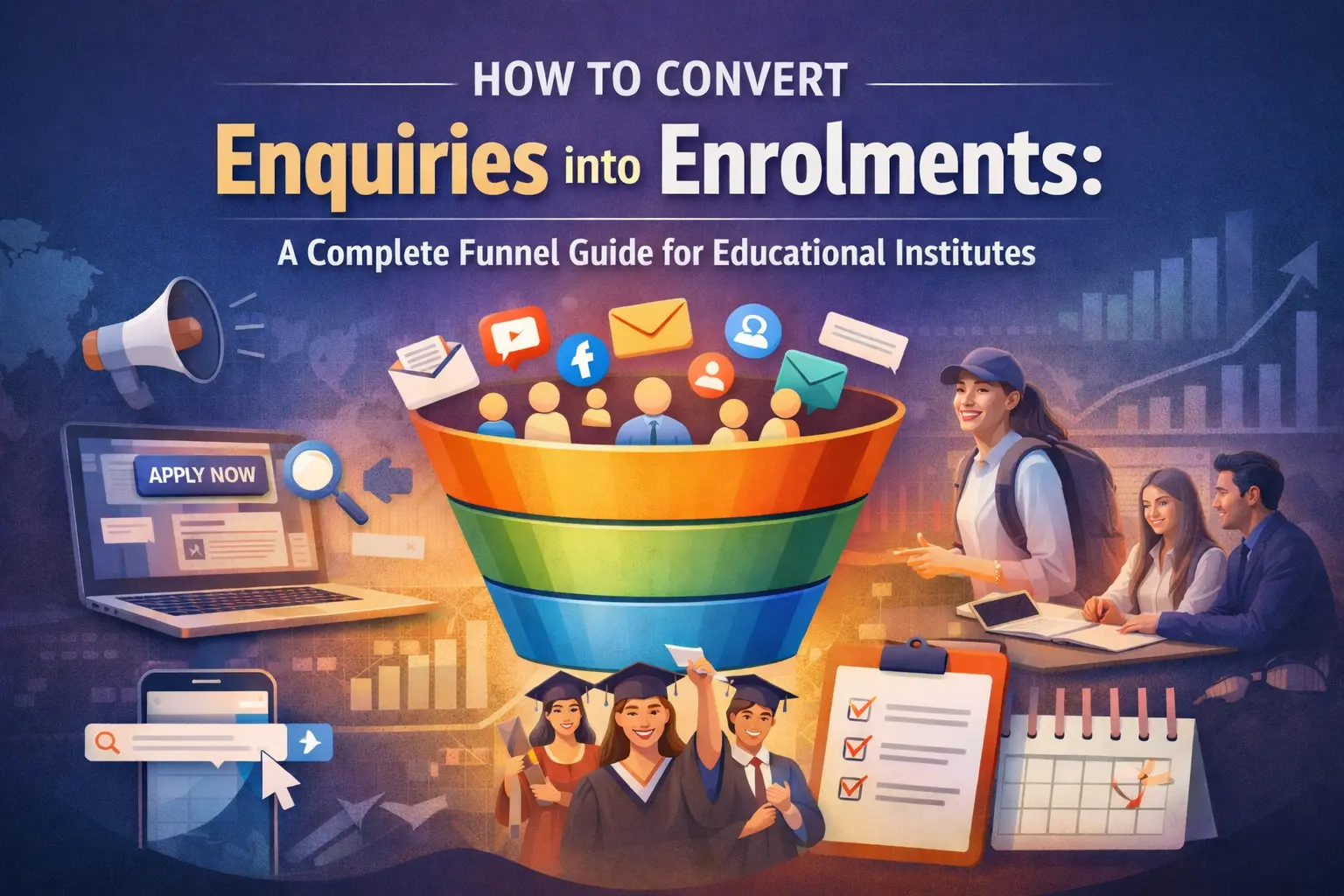
Understanding the Education Lead Generation Funnel
At its core, an effective education funnel mirrors the student mindset. It begins by attracting the right students, not just more students. It then nurtures those students with relevant information, reassurance, and proof. Finally, it makes the enrolment decision feel simple, safe, and exciting.
This journey can be broadly understood as three connected phases: attracting interest, nurturing consideration, and converting intent into enrolment. While the phases sound simple, success depends on how thoughtfully each one is executed
Attracting the Right Students Through Digital Marketing
Attraction is not about visibility alone-it’s about relevance. Strong SEO ensures your institution appears when students are actively searching for programs, career outcomes, or admissions information. Ranking for course‑specific, location‑based keywords brings in students who are already considering enrolment, not just browsing casually.
Google Ads for schools play a crucial role here, especially for time‑sensitive admissions cycles. Well‑structured search campaigns with dedicated landing pages for each program tend to outperform generic “Admissions Open” campaigns. When students see messaging that matches their exact intent, trust begins forming immediately.
Social platforms like Instagram and YouTube support this process by humanizing your brand. Campus tours, student stories, alumni journeys, and faculty insights help students imagine themselves at your institution. This emotional connection often becomes the deciding factor later in the funnel.
Website CRO: Turning Interest into Enquiries
Your website is no longer a brochure-it’s your most important admissions counsellor. Even with strong SEO and ads, poor website CRO can quietly kill conversions.
High‑performing education websites guide visitors naturally. Program pages answer real student questions, calls‑to‑action are clear and reassuring, and enquiry forms feel quick and purposeful rather than intrusive. Trust signals such as accreditations, reviews, placement outcomes, and alumni success stories reduce hesitation at the exact moment students are deciding whether to raise their hand.
Gated resources like brochures, career guides, or scholarship information also play a powerful role. They allow students to explore at their own pace while giving institutions permission to continue the conversation.
Nurturing Students Through the Decision Journey
This is where most institutions struggle. Once an enquiry is captured, many rely on a single email or an occasional phone call. But students need ongoing guidance, not pressure.
Lead nurturing in higher education is about delivering the right information at the right time. Early‑stage students need clarity and reassurance. Mid‑stage students want proof, outcomes, and comparisons. Late‑stage students need urgency, confidence, and human support.
Personalized communication significantly outperforms generic outreach. When messages reference a student’s chosen program, goals, or location, engagement increases dramatically. Modern marketing automation makes this level of personalization scalable, even with large lead volumes.
Using multiple communication channels strengthens this relationship further. Email provides depth, WhatsApp offers immediacy, remarketing ads maintain visibility, and counsellor calls add the human touch students rely on before committing.
Building Trust Through Storytelling and Proof
Education is a high‑stakes decision involving students and parents alike. Trust is not optional-it’s foundational.
Instead of overwhelming prospects with data, effective institutions tell stories. Alumni journeys, student testimonials, day‑in‑the‑life content, and faculty narratives make the experience tangible. These stories help students see beyond brochures and imagine real outcomes.
When trust builds gradually through consistent messaging and proof, the decision to enrol feels less risky and more natural.
Using Lead Scoring to Focus Efforts
As enquiry volumes grow, not every lead deserves the same level of urgency. Lead scoring helps admissions teams prioritize students based on intent signals such as engagement, program interest, and expected intake timelines.
This ensures high‑intent students receive faster responses and deeper support, while early‑stage prospects continue to be nurtured without being rushed. Over time, this balance improves both efficiency and admission conversion rates.
Converting Interest into Enrolment
When students are ready, the enrolment process should feel effortless. Clear next steps, transparent fees, application walkthroughs, deadline reminders, and access to counsellors all reduce friction at the final stage.
Human interaction matters most here. Studies consistently show that timely counsellor contact-especially within minutes of high‑intent actions-dramatically increases conversions. At this point, students aren’t looking for persuasion; they’re looking for reassurance.
The Journey Doesn’t End at Application
Even after acceptance, communication matters. Celebrating students, sharing onboarding details, and guiding them through what comes next reinforces their decision and reduces drop‑offs. When institutions share in a student’s excitement, relationships strengthen long before the first day of class.
“Funnels aren’t sales tricks. They are support systems designed to help students make confident decisions about their future.
By combining SEO, Google Ads for schools, thoughtful digital marketing for educational institutions, and conversion‑focused website CRO, institutes can transform scattered enquiries into meaningful enrolments.
You’re not just filling seats-you’re shaping futures. A well‑built funnel ensures you do both responsibly and successfully.”
Bringing It All Together
A well-designed education lead generation funnel is not about aggressive marketing or constant follow-ups. It’s about understanding how students think, how they research, and what they need at each stage of their decision-making journey.
When SEO brings the right students to your website, website CRO ensures they take action. When digital marketing for educational institutions focuses on relevance instead of reach, enquiries become meaningful conversations. And when Google Ads for schools are aligned with intent rather than volume, they accelerate decisions instead of forcing them.
Most importantly, a strong funnel replaces guesswork with clarity. Admissions teams know who to prioritize, students feel supported rather than sold to, and institutions see consistent improvements in enquiry-to-enrolment conversion rates.
In an increasingly competitive education landscape, the institutes that win are not the ones generating the most leads-but the ones guiding students best.
If you treat your funnel as a long-term student experience rather than a short-term sales process, enrolments will follow naturally.