The Rise of Zero-Click Search: How Brands Can Still Capture Visibility & Traffic
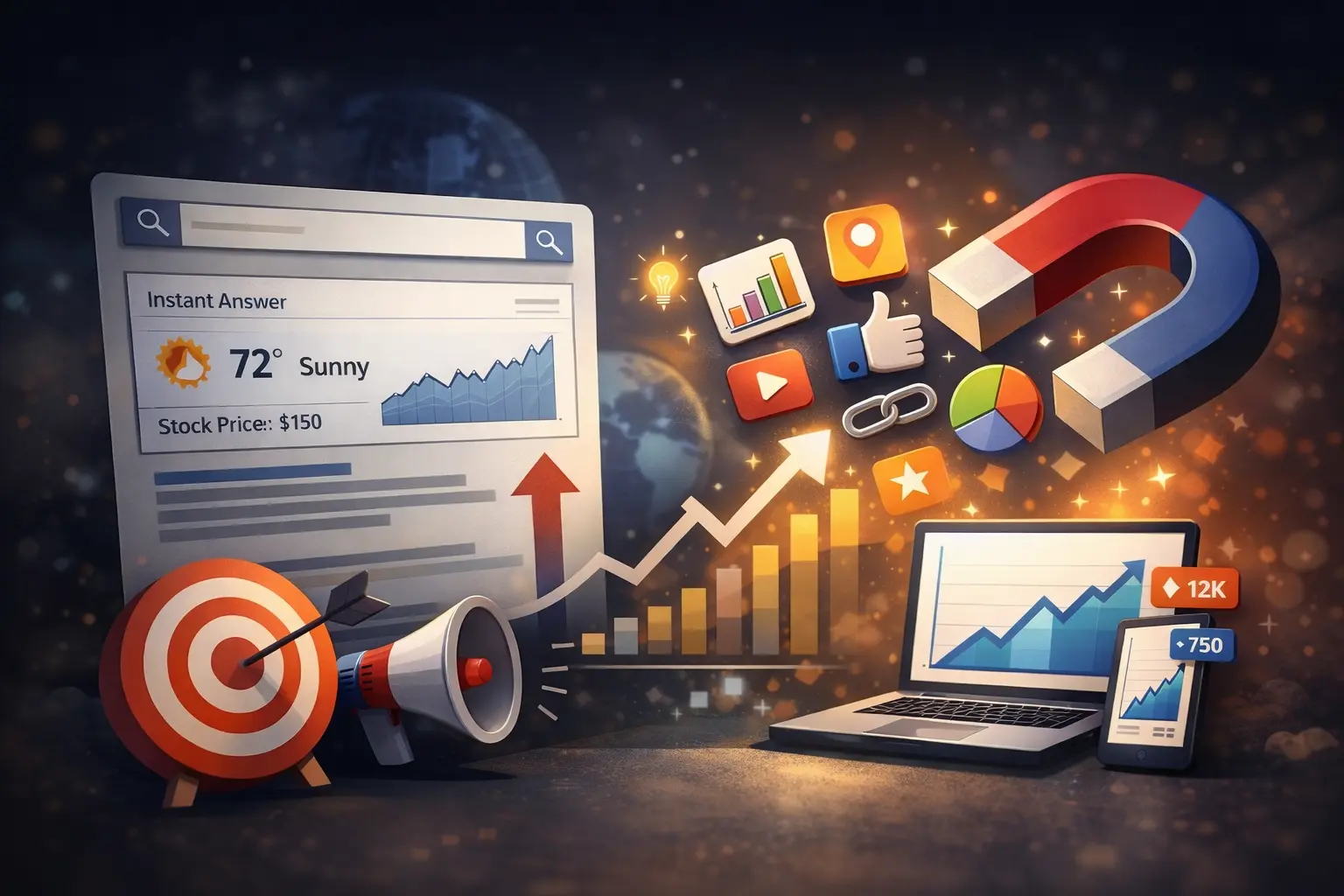
Zero-click searches are no longer a trend-they are the new environment in which SEO lives. With Google’s AI Overviews, featured snippets, People Also Ask (PAA), Knowledge Panels, and conversational search interfaces, users now get answers without visiting any website
According to industry studies, over half of Google zero-click searches end without a click, and this number continues to rise as AI-driven search becomes the default search experience.
For brands, this shift can feel alarming. But here’s the truth:
- Zero-click results do NOT mean zero opportunity.
- SEO is not dying-it is evolving into Answer Engine Optimization (AEO).
- Winning today is about visibility, impressions, and entity authority-not just clicks.
In this guide, we will explore how brands can maintain visibility in a zero-click world, how to optimise for SERP features, and how impression-based SEO can create brand awareness-even when users never land on your website.
What Is Zero-Click Search?
A zero-click search is a query where the user gets an answer directly on the results page-without clicking any organic or paid link.
Examples include:
- Featured Snippets
- AI Overviews
- Knowledge Panels
- Direct Answers
- People Also Ask (PAA)
- Local Packs & Map results
- AI chat-style responses (Google AI Mode, ChatGPT, Bing Copilot, Perplexity)
These zero-click results are powered by structured content, high-authority sources, and strong entity relationships.
In short: Google answers more questions itself, instead of sending traffic to websites.
Why Is Zero-Click Search Rising? (Technology + Behavior)
1. AI is transforming the search experience
Google’s Gemini-powered features now produce rich, instant answers such as:
- AI Overviews
- Expanded PAA responses
- “Things To Know” modules
- Conversational Search
These models summarise content from multiple authoritative sources, creating complete answers that eliminate the need to click through to websites.
2. Search behaviour has changed
Users no longer search using fragmented keywords.
They use natural, conversational queries like:
- “how to choose the best course after 10th”
- “what to do if my website traffic drops”
- “best alternative for XYZ tool”
People now expect instant clarity, short explanations, and direct instructions—something long articles often fail to deliver immediately
3. Voice & visual search dominate mobile behaviour
Voice assistants and Google Lens prioritize short factual answers.
Instead of “reading,” users want spoken or visual verification.
This naturally reduces the number of clicks to websites
4. Search engines prioritise entities, not keywords
Google’s Knowledge Graph focuses on entity understanding – brands, people, places, concepts.
When your brand becomes a strong, trusted entity, Google pulls your information even if your website is not clicked.
This is why certain brands appear repeatedly in snippets and AI-generated answers.
The Real Impact of Zero-Click Search on SEO
The rise of Google zero-click searches has created several challenges:
1. Declining organic clicks
Even if you rank on Page 1, the actual traffic may drop because the answer is displayed before your link.
2. More SERP fragmentation
Google displays your brand across multiple surfaces-AI Overviews, PAA, images, videos-but analytics tools rarely track them accurately.
3. Traditional SEO metrics lose meaning
CTR, sessions, and average position no longer reflect actual brand visibility.
4. Attribution becomes difficult
A user may see your brand multiple times in SERPs or AI answers but only click after several exposures.
“SEO can no longer depend on clicks alone. Visibility and brand presence now matter just as much.”
Introducing Impression-Based SEO: Visibility Over Clicks
Impression-based SEO focuses on showing up consistently across all SERP and AI surfaces-even if the user never clicks through.
This includes:
- Appearing in Featured Snippets
- Being cited in AI Overviews
- Showing up in PAA boxes
- Being included in Knowledge Panels
- Ranking in image, video, and local SERPs
This approach ensures your brand remains visible, discoverable, and top-of-mind-even without website visits.
How Brands Can Win in a Zero-Click World (AEO + SEO Without Clicks)
Below are the most effective strategies to maintain brand visibility – even when users don’t visit your site
1. Optimize for SERP Features (AEO Strategy)
To appear in zero-click results, structure your content for:
Featured Snippets
To appear here, your content must provide the most concise, authoritative answer.
Use:
- Question-based headings
- 40–60 word summaries
- Bullet points
- Definitions
- Step-by-step lists
Google prefers clarity over length.
People Also Ask (PAA)
Format content like FAQs:
- Question
- 1–2 line answer
- Additional context if needed
PAA questions help cover long-tail, conversational queries.
AI Overviews & AI Generative Answers
- To be cited in AI-generated results, your content must be:
- Authoritative and expert-written
- Supported by structured data
- Fact-driven
- Aligned with E-E-A-T signals
- Clear and well-formatte
Knowledge Panels & Entity Listings
Ensure your brand entity is validated by:
- SameAs schema
- Wikipedia/Wikidata
- Strong LinkedIn, Crunchbase profiles
- Consistent NAP details
- Author identity profiles
These confirm to Google that your brand is real, credible, and worth citing.
2. Strengthen Your Brand as an Entity
Google relies on entities, not keywords.
Improve entity authority by:
- Creating expert-driven content
- Publishing thought leadership on industry platforms
- Getting citations from trusted websites
- Maintaining active LinkedIn, YouTube, and PR profiles
- Building topic clusters around key concepts
When your brand becomes a recognized entity, Google automatically uses you as a source in zero-click results.
3. Structure Content for AI Consumption
AI Overviews prefer:
AI Overviews prioritize content that is:
- Cleanly structured
- Easy to parse
- Factually accurate
- Supported by schema markup
Use:
- Simple headings
- Short paragraphs
- Bullet lists
- Tables
- FAQ schema
- How-to schema
- Review & product schema
Think like you’re writing for both humans and AI.
4. Improve Voice & Visual Search Optimization
Voice search requires natural, conversation-style answers.
Visual search (Lens) prioritizes:
- High-quality images
- Accurate alt text
- Schema-rich product pages
These channels drive massive zero-click visibility on mobile.
5. Expand Your Presence Beyond Your Website
AI systems pull data from all over the internet—not just your site.
Strengthen your presence on:
- Wikipedia & Wikidata
- Industry platforms
- Review sites (G2, Capterra)
- Reddit & Quora
- LinkedIn and YouTube
- Guest blogs & PR sites
AI increasingly trusts third-party platforms more than standalone websites.
6. Use New Metrics for Zero-Click Search Success
Traditional metrics (Sessions, CTR, Avg. Position) become misleading.
Start tracking:
SERP presence share:
How often your brand appears in:
- Featured Snippets
- AI Overviews
- PAA
- Knowledge Panels
- Images & video SERPs
Brand mentions in AI tools
Track visibility in:
- Google AI Mode
- ChatGPT
- Bing Copilot
- Perplexity
- Claude
Impression growth
Google Search Console now includes AI Overview citations (limited, but crucial).
Entity-level coverage
Measure visibility across all queries tied to the same entity.
This is how you evaluate SEO without clicks.
Case Study: How Brands Are Adapting
When HubSpot saw a 70% drop in organic traffic due to zero-click shifts, they changed their strategy:
- Prioritized expert-driven content
- Added structured markup for snippet visibility
- Shifted from traffic metrics to visibility metrics
- Expanded their ecosystem (Academy, Community, Research)
Result:
They now appear frequently in AI-generated answers—despite lower traffic.
Practical Zero-Click Search Checklist
On-page optimization
- Add question-based H2/H3s
- Build short answer blocks
- Add FAQ schema
- Include lists, tables, and definitions
- Optimise for Featured Snippets
AEO optimization
- Strengthen entity profiles
- Build external citations
- Use structured data
- Create expert-authored content
SERP visibility
- Optimize for PAA
- Track impressions
- Monitor AI citations
- Build presence across multiple platforms
Brand visibility
- Publish on top industry sites
- Keep Google Business Profile updated
- Improve multimedia visibility
Practical Zero-Click Search Checklist
Zero-click results don’t kill SEO.
They redefine it.
- The brands that win in the future will be:
- Visible across the entire SERP
- Trusted as an authoritative entity
- Quoted by AI engines
- Structured for answers, not just keywords
- Optimized for impressions, not clicks
In the AI era, attention flows not to the loudest brand-but to the most useful.
If you want to stay visible, focus on becoming the source search engines rely on.
“Visibility is the new traffic. Authority is the new ranking. AEO is the new SEO.”